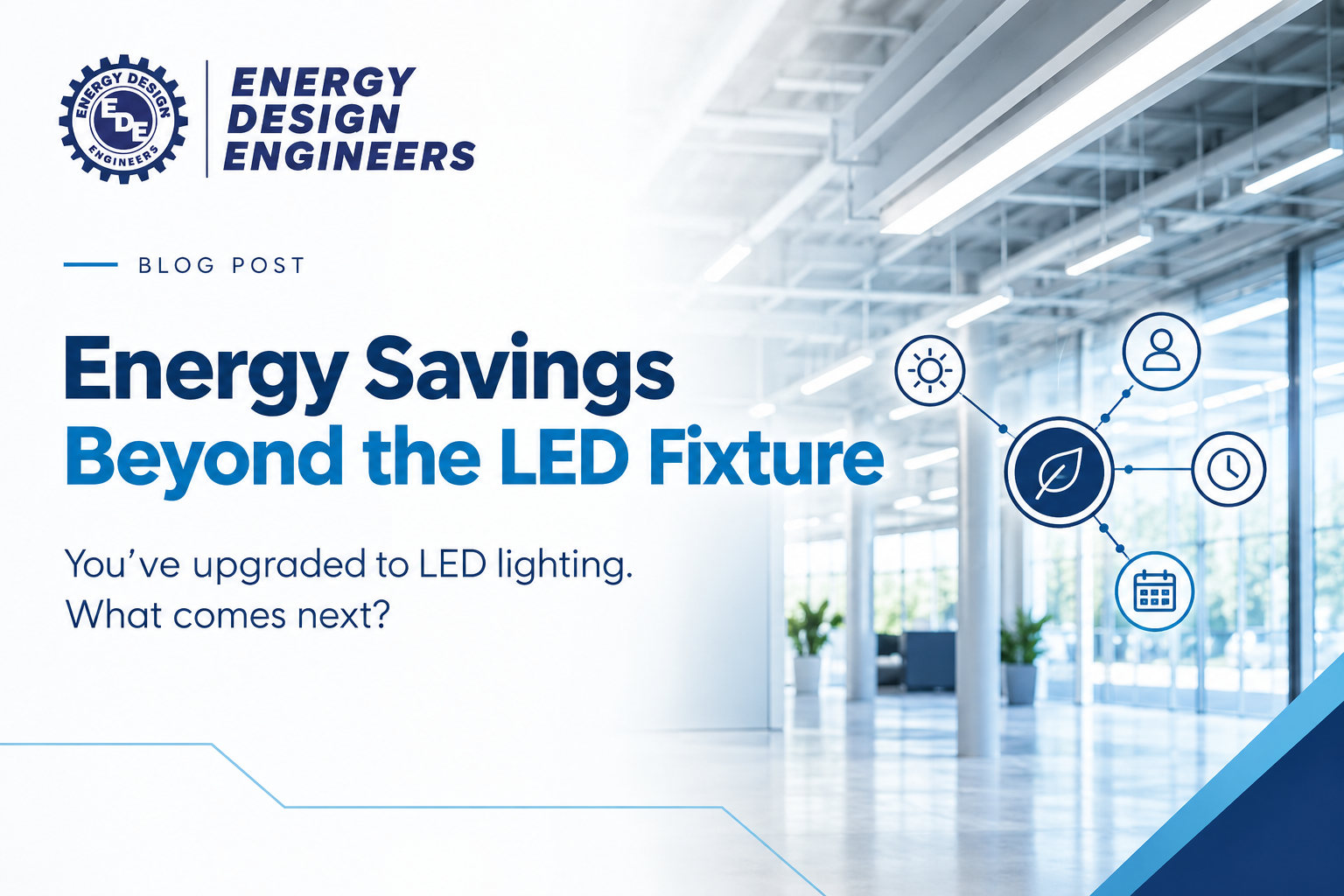
You’ve upgraded to LED lighting. What comes next?
LED fixtures reduce the energy needed to produce light. Networked lighting controls reduce unnecessary light output and operating hours, helping you capture savings that an LED upgrade alone leaves on the table.
Research from the DesignLights Consortium and the Northwest Energy Efficiency Alliance estimated average lighting energy savings of 49% with networked lighting controls compared with uncontrolled lighting. Actual results vary with occupancy, existing settings, daylight, and how the system is commissioned.
These savings come from several strategies working together:
● High-end trim: Set the maximum light output to meet the task’s requirements rather than running every fixture at full brightness.
● Daylight harvesting: Automatically dim fixtures when available daylight provides part of the required illumination.
● Occupancy control: Dim or turn off lighting in vacant areas, then restore the appropriate level when people return.
● Scheduling: Align lighting operations with production shifts, cleaning schedules, and building hours.
These strategies overlap, so their savings percentages should not simply be added together.
The opportunity also extends beyond lighting. During an EDE Energy Waste Hunt, monitoring an electrical panel for a representative week can reveal how much power an area uses during working hours, at night, and on weekends. If consumption remains high when the space is empty, we investigate which loads are running and whether they need to be running.
Compatible controlled outlets and plug-load devices can reduce unnecessary operation of selected office equipment, task lighting, and other nonessential loads. Equipment must be suitable for automatic switching, with essential systems kept available.
Occupancy information from a lighting network can also support HVAC control and help facilities teams understand how spaces are used. With compatible hardware, software, and integration, that information can help reduce heating and cooling in vacant areas while preserving comfort and operating requirements.
An LED upgrade is an opportunity to keep improving. EDE evaluates your existing fixtures, measures operating patterns, and identifies where controls can reduce waste across lighting
while and connected systems. We then develop a practical plan with estimated savings, implementation costs, and clear next steps.
Already have LED lighting? Let EDE help you find the energy savings still available in your facility.
Already have LED lighting? There may be more energy savings available.
Let EDE evaluate your facility and identify opportunities to reduce energy waste through lighting controls, occupancy strategies, scheduling, and connected systems.
Find Your Energy Savings →